Learn Forex Basics Fast Today

The global currency market moves at a speed that feels almost unreal. Prices shift in seconds, economies influence each other instantly, and opportunities appear and disappear before most people even notice. Yet behind all that chaos, there’s a system. If you understand how it works, you’re no longer guessing, you’re making calculated decisions in one of the most liquid markets in the world.
In today’s digital era, forex basics learning has become more accessible than ever, allowing beginners to step into a space once dominated by financial institutions. Humanity really looked at global economics and decided, “what if we turned this into a 24-hour stress simulator with charts.” Incredible species. What used to require deep industry connections can now be learned through structured knowledge, smart tools, and real-time data. The question isn’t whether you can learn forex anymore, it’s whether you’re willing to approach it with the right mindset and strategy.
Understanding Forex Market Fundamentals
Stepping into forex without understanding its foundation is like trying to navigate a city without a map. You might move, but you won’t know where you’re going. This section breaks down the core mechanics so you can actually see the structure behind the movement. To truly accelerate your progress, a fast forex learning guide becomes essential because it helps you filter noise and focus on what actually drives the market, from macroeconomic signals to trader sentiment.
What is forex trading and how it works
Forex trading is the act of buying one currency while simultaneously selling another. It operates in pairs, meaning every trade reflects a comparison between two economies. The goal is simple, profit from price changes. But the execution requires understanding exchange rate fluctuations, market liquidity, and how global events shape demand. As George Soros once said, “It’s not whether you’re right or wrong that matters, but how much you make when you’re right and how much you lose when you’re wrong.” That mindset is deeply embedded in forex trading, where risk management often matters more than prediction.
Major currency pairs explained
Major currency pairs are the backbone of the forex market. These include combinations like EUR/USD or USD/JPY, representing the strongest economies globally. They are highly liquid, meaning trades execute faster and spreads are typically lower. For beginners, focusing on these pairs simplifies learning.
How the forex market operates globally
Forex runs 24 hours a day across different sessions, starting from Asia, moving to Europe, and then to North America. Each session brings its own characteristics, levels of volatility, and trading opportunities. Understanding forex market sessions, time zone overlaps, and trading volume spikes helps you decide when to trade instead of randomly entering the market.
Essential Tools for Beginner Traders
Before placing any trade, you need the right tools. Not just software, but systems that help you interpret the market logically instead of emotionally. This is where beginners either build a strong foundation or start making avoidable mistakes. A structured approach using a fast forex learning guide ensures that you’re not overwhelmed by features, but instead focused on mastering what actually matters for consistent decision-making.
Trading platforms and how to use them
Trading platforms like MetaTrader or TradingView act as your control center. They allow you to analyze charts, execute trades, and manage risk all in one place. Learning how to navigate these platforms effectively means understanding order types, setting stop-loss levels, and managing leverage. These are not optional features, they are critical for survival in the market.
Reading forex charts and indicators
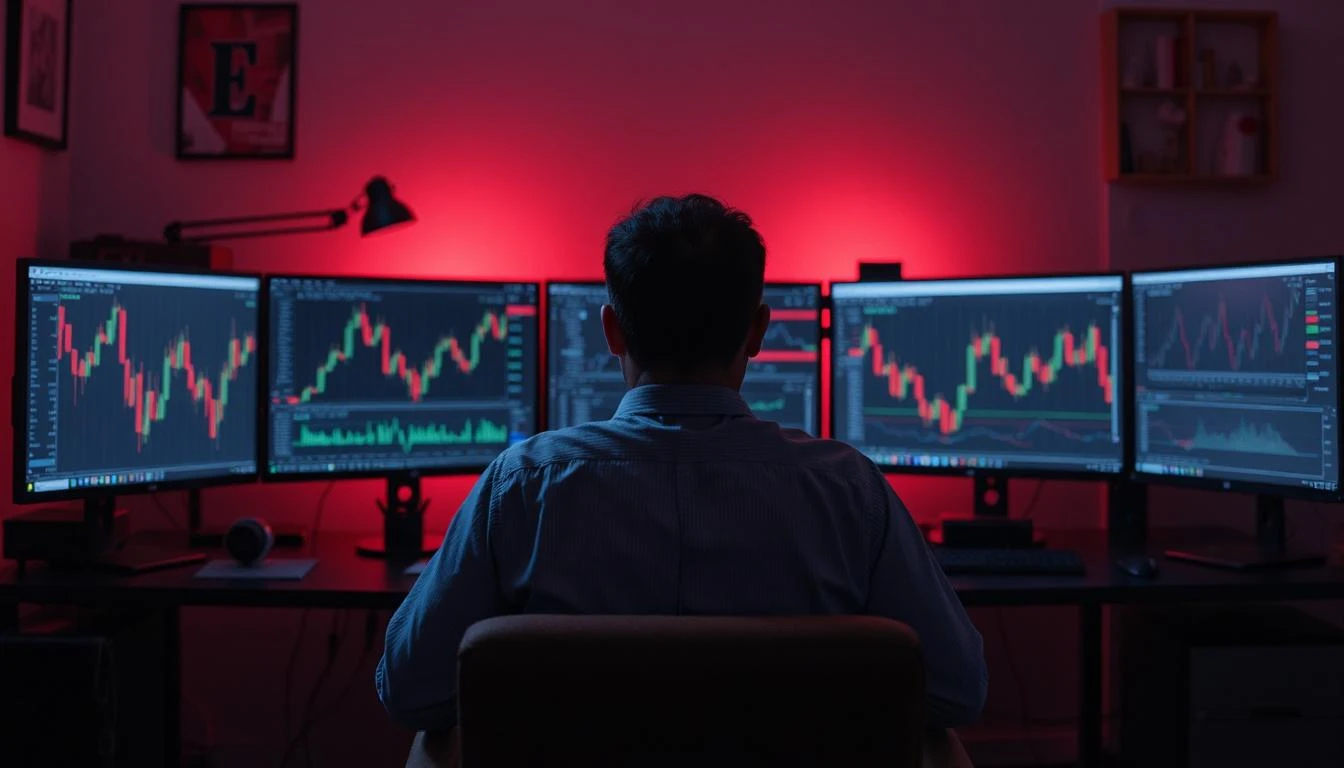
Charts translate market behavior into visual patterns. Candlestick formations, trend lines, and indicators like RSI or MACD help you identify potential entry and exit points. Incorporating concepts like support and resistance levels, trend analysis, and momentum indicators allows you to interpret the market with more clarity. Instead of reacting emotionally, you begin to act based on probability.
Basic terms every trader must know
Forex has its own language. Terms like pip, spread, margin, and lot size define how trades function and how profits or losses are calculated. Understanding these terms is not just about memorization, it’s about knowing exactly what’s happening when you place a trade. Without this, even the simplest decision can turn into an unnecessary risk.
Simple Steps to Start Trading Quickly
Starting forex doesn’t require perfection, but it does require preparation. The difference between a beginner who grows and one who quits often comes down to how they approach their first few trades. With a clear process and guidance from a fast forex learning guide, you can avoid the common traps that cause most beginners to lose confidence early on.
Opening a trading account
The first step is choosing a regulated broker and opening an account. This involves verification, selecting account types, and funding your balance. Look for brokers offering demo accounts. Practicing in a simulated environment allows you to understand the mechanics without risking real money.
Placing your first trade
Your first trade should be simple and controlled. Choose a major currency pair, analyze a basic trend, and execute your trade with a defined plan. Entry point, stop-loss, and take-profit levels should be clear before you click anything. Trading without a plan is not strategy, it’s guesswork dressed in confidence.
Common beginner mistakes to avoid
Many beginners fall into the same traps, overtrading, ignoring risk management, and letting emotions dictate decisions. As Benjamin Graham famously said, “The investor’s chief problem and even his worst enemy is likely to be himself.” In forex, discipline is not optional. It’s the difference between growth and loss.
Start Your Forex Journey with Confidence Today
At some point, learning needs to turn into action. You can read guides, watch tutorials, and analyze charts endlessly, but real understanding comes from experience. The market rewards those who are prepared, patient, and consistent. Think about this for a second. Every trader you look up to once started exactly where you are now, confused, curious, and unsure. The difference is they didn’t stop at learning, they applied it. If you’ve made it this far, you already have more clarity than most beginners. Now it’s about taking that next step and actually using it.